Introduction
Once you have pushed your deployment configuration you should do some testing to see if the results align with your expectations.
Configure and run closed-loop traffic at Simulation (/entities/simulation) — the loop runs in-process on the Workbench backend (Simulations). For automated business evidence on one project, deployment, and version, use Runtime Testing (/runtime-testing) (Campaign Testing).
There are two ways to test your deployment from the Laboratory walkthrough below:
1. Test your API
In the Laboratory section of the Workbench, you will find Manage APIs. Here you will find a list of all your deployments.
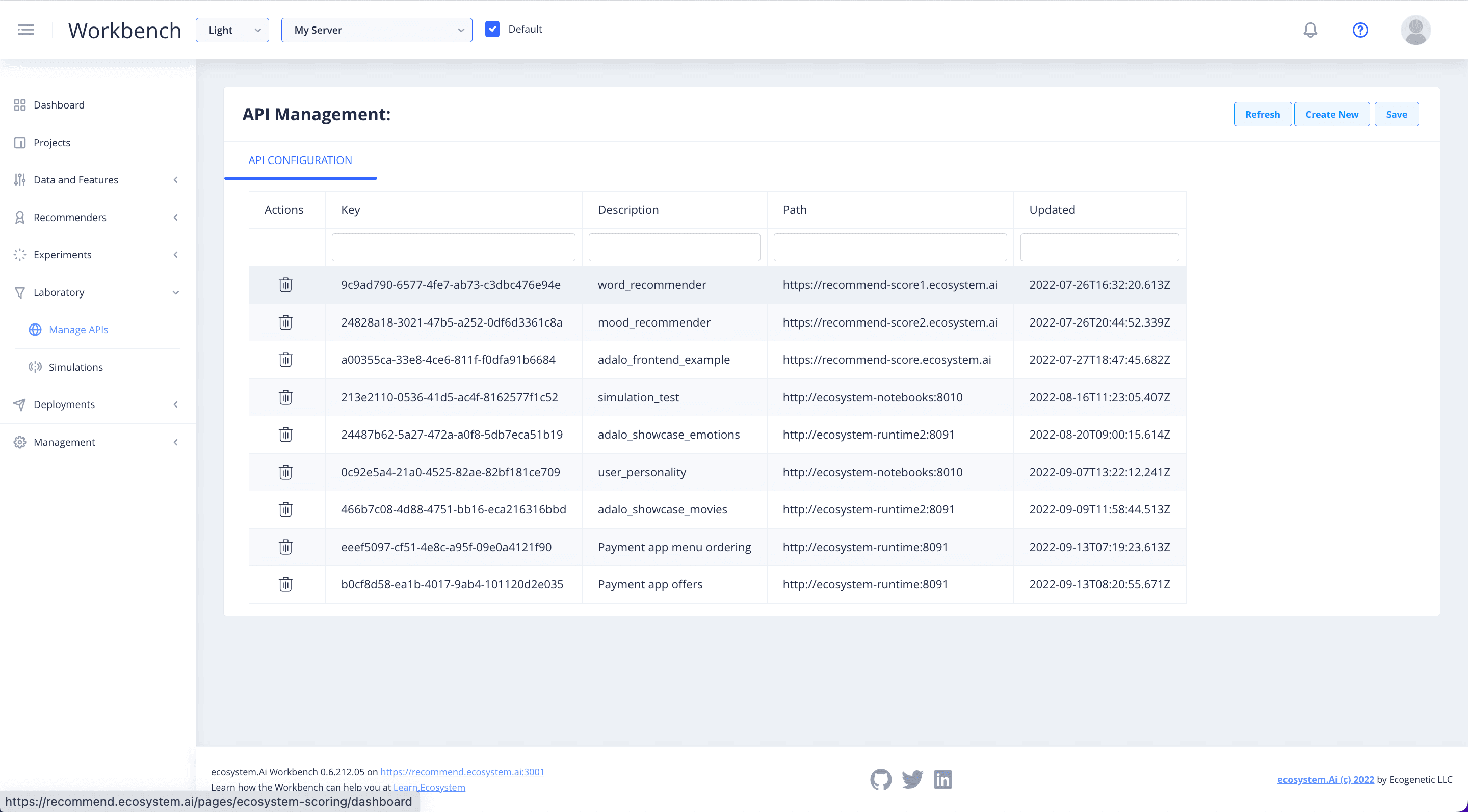 If you have been going through this User Guide using one of the pre-configured examples, click on the relevant deployment to view the details.
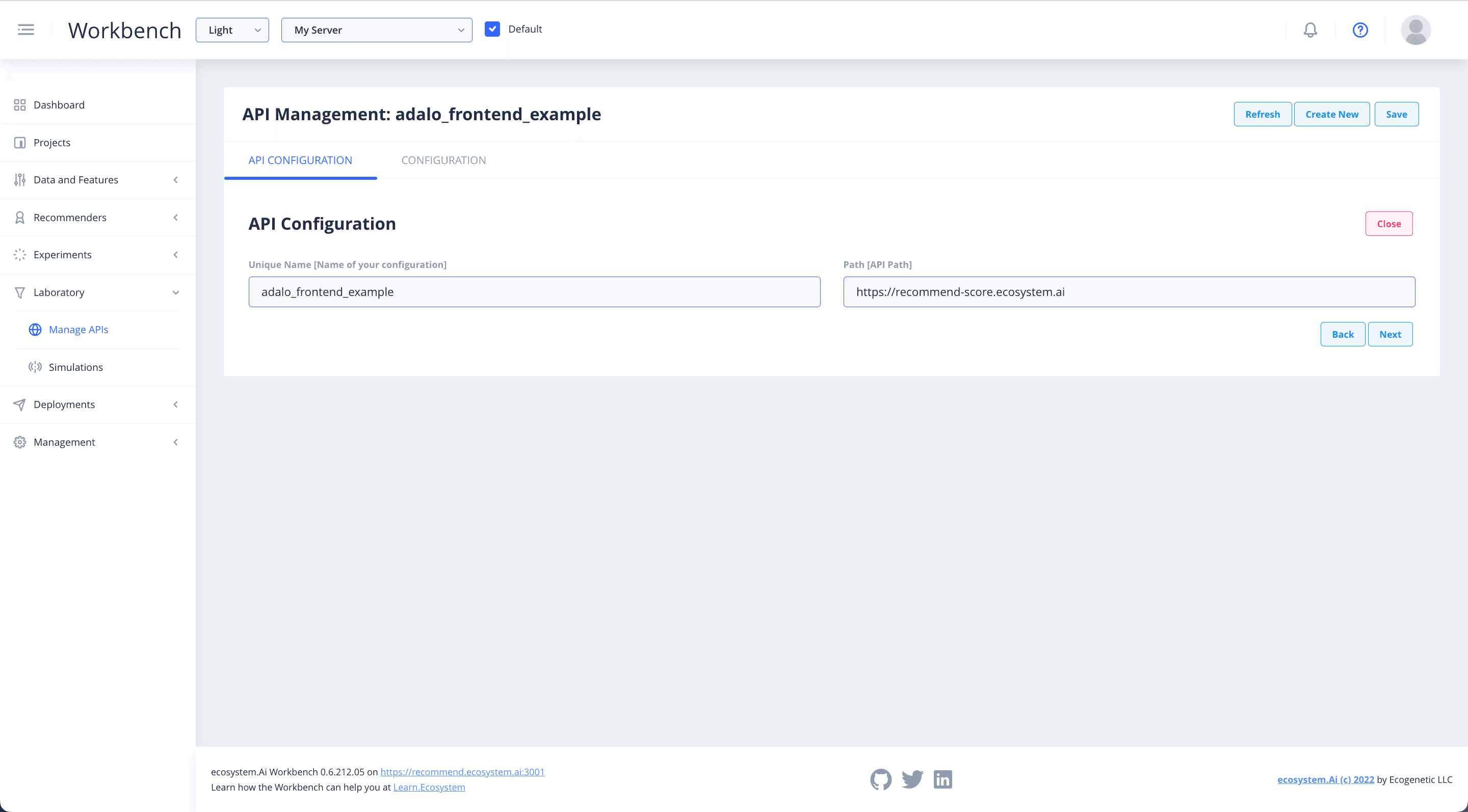
Create API
If you have created your own Project and Deployment, click Create New to make a new API.
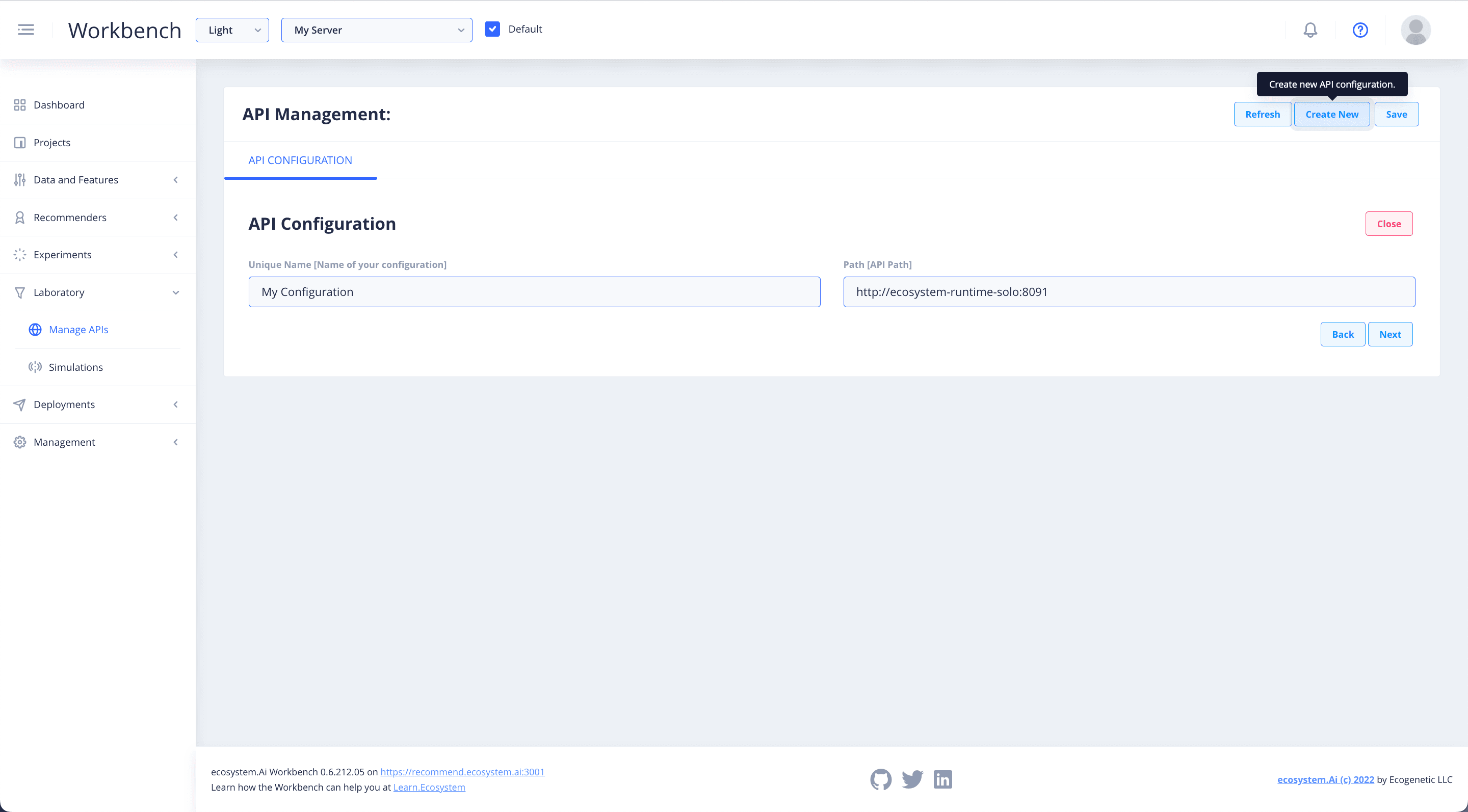 Provide the Unique Name of your deployment and click Next to add it to the list.
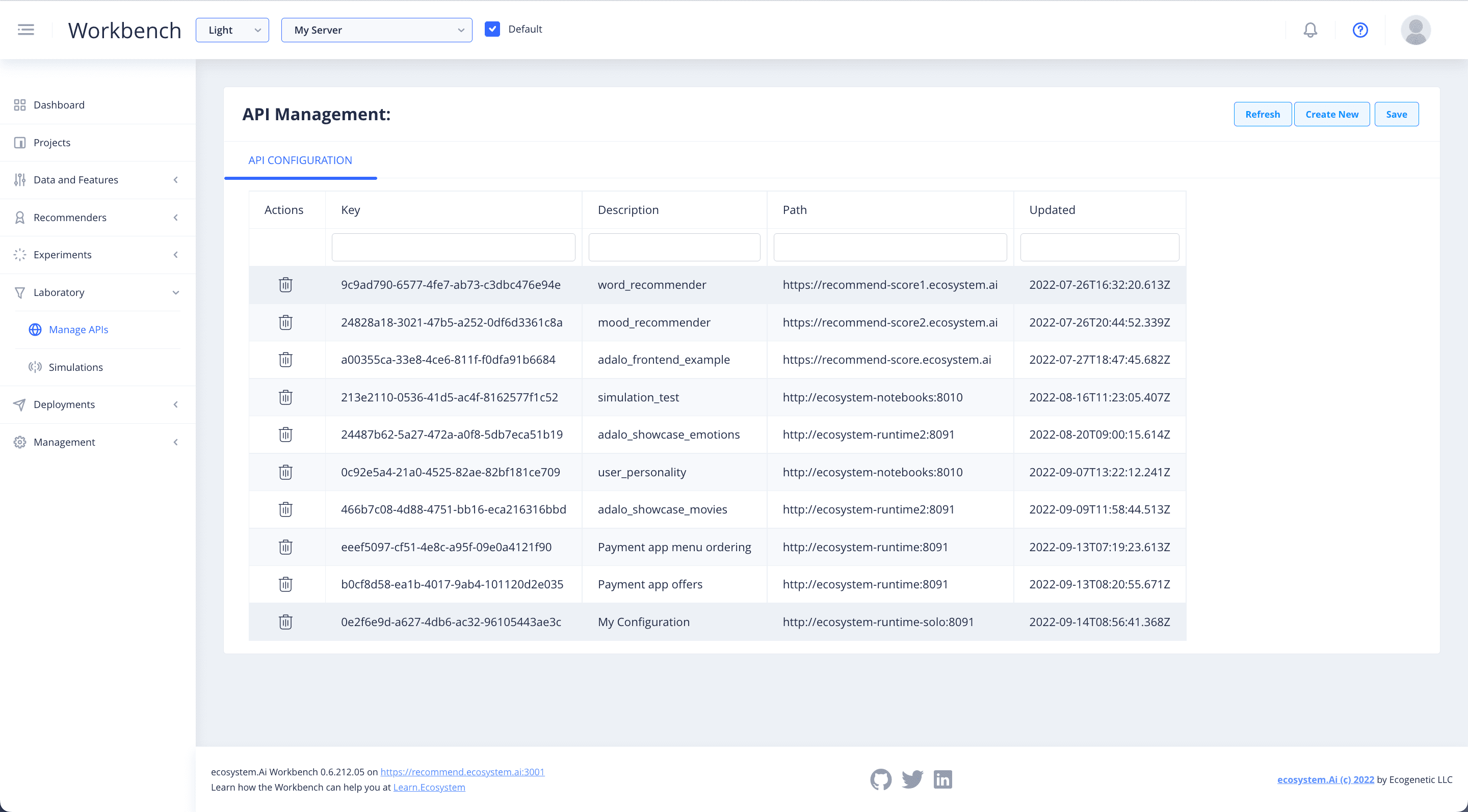
Select the configuration to view and edit the details of your API.
Configure API Test
Go to the Configuration tab and select the one you want to test.
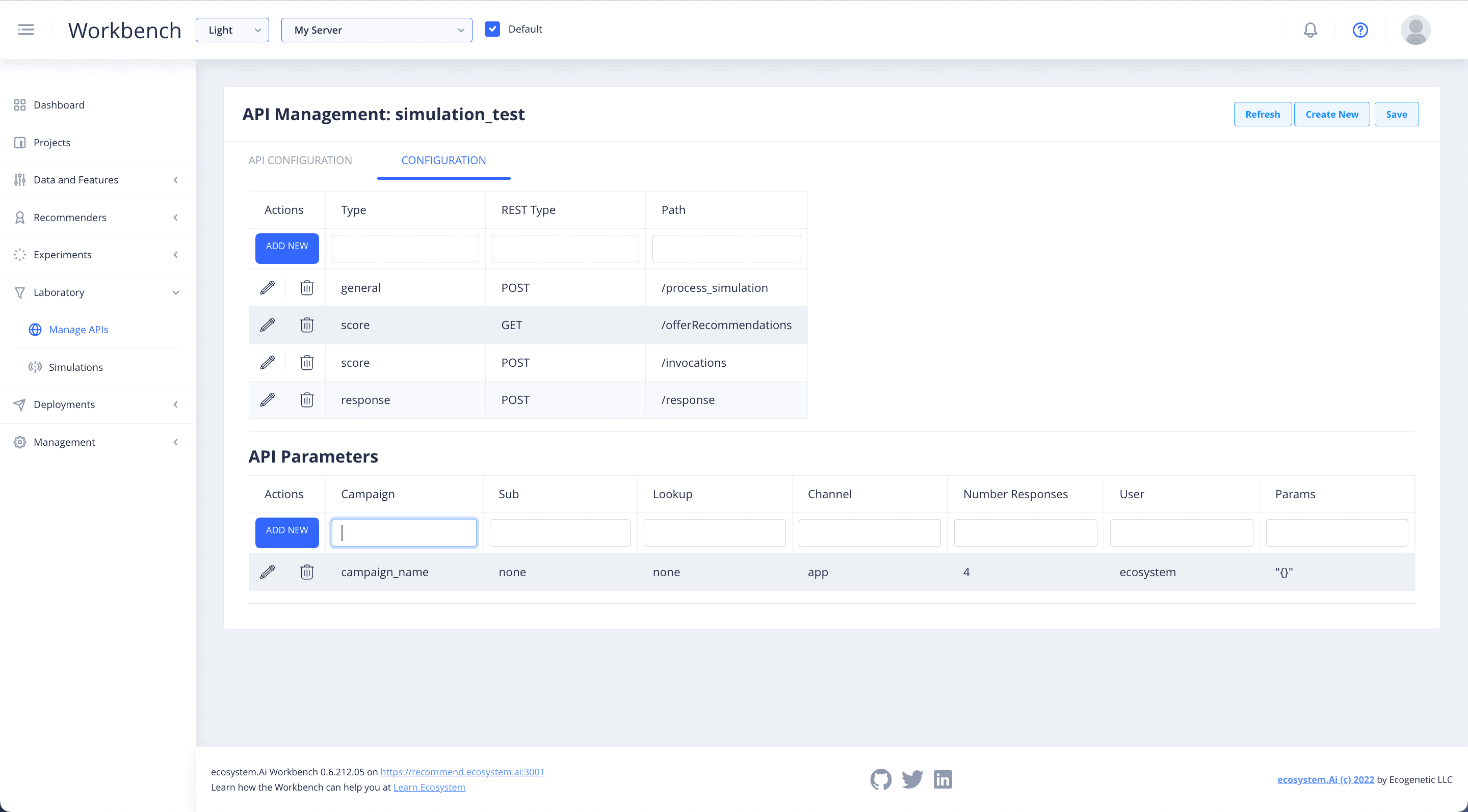
Fill in the relevant details of the campaign, then click on the campaign to bring down the API test window.
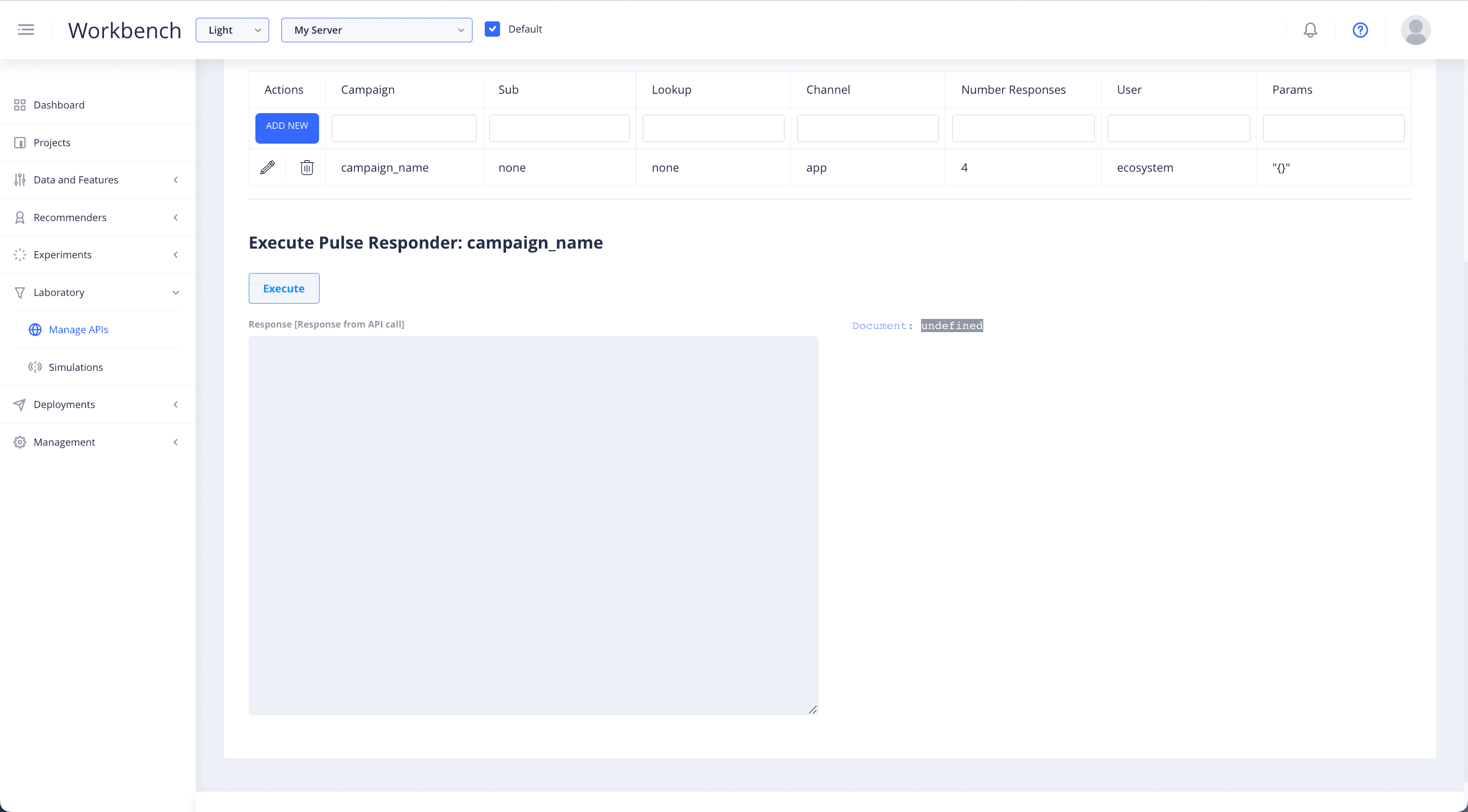
Click Execute to bring back the API results and ensure your deployment is functioning.
2. Build a simulation
Drive closed-loop traffic against the pushed deployment from Workbench 2 Simulation (/entities/simulation): iterations, take-up, connections, logs, Beta / options-store results, and result Explain. The engine runs in-process on the Workbench backend (notebooks process_simulation returns 410).
See Simulations for the current process (Validate connections, optional scenario describe, MCP tools). Single-call tests belong on the Runtime Dashboard. Business evidence for one deployment: Campaign Testing. To analyze the resulting logs, run an Interactions Analytic job.